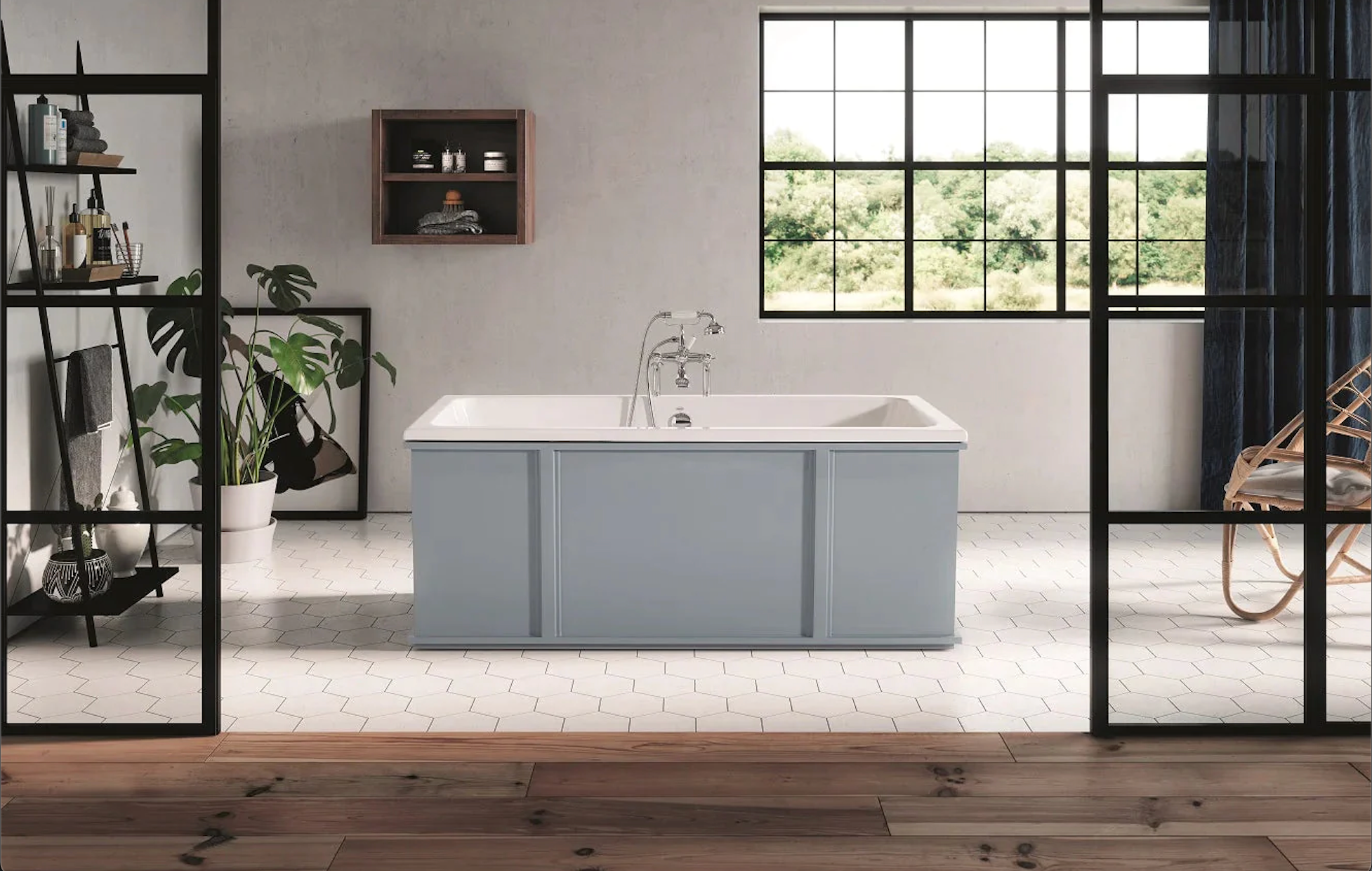
A cast iron bathtub brings a substantial feel and an enamel bathing surface to your bathroom. Choosing the right one starts with how you want to bathe, the space available and the installation you are planning. This guide walks through the decisions to make before ordering, with examples from the Cheviot bathtub collection.
What is a cast iron bathtub?
A cast iron bathtub has an iron body with an enamelled interior. The material gives the bath its weight and solid feel, while the enamel provides the finished surface you touch. Cast iron is available in several forms, including freestanding pedestal baths and tubs designed for a built-in surround.
Material is only one part of comfort. Interior shape, backrest slope, usable bathing space and the position of the drain also affect how a tub feels. Compare the specific models on your shortlist rather than choosing by overall length alone.
Choose a freestanding or built-in bath
Freestanding pedestal bathtub
A pedestal bath has a continuous base that becomes part of the room's design. The Sandringham Cast Iron Bathtub is a double-ended model with a low-profile pedestal and an enamel interior. It is a useful starting point if you prefer a freestanding bath with a continuous base rather than exposed feet.
Plan space around the tub for access and cleaning, and decide where towels and bathing essentials will sit. Include the faucet in your layout: its position needs to work with the tub rim and the space around the bath.
Drop-in or undermount bathtub
A built-in bath lets you design a surround as part of the room. Cheviot's Drop-In/Undermount Cast Iron Bathtub has an enamelled interior and an unfinished exterior intended to be concealed by the installation.
In a drop-in layout, the rim remains visible above the surround. An undermount layout places the finished surround over the rim. Discuss the selected model's support, waterproofing, rim detail and drain access with your installer before the surround is fabricated. The finished appearance depends on planning the tub and surround together.
Compare the actual dimensions
Use the dimensions for the exact model you intend to order. A size category is helpful for browsing, but it does not replace the product measurements.
For example, the Sandringham #2154 measures 60 5/8 inches long by 30 3/4 inches wide by 20 1/2 inches high. The larger #2162 and #2163 models measure 70 inches long by 32 inches wide by 23 inches high. Their faucet-hole configurations differ, so size alone does not identify the right version.
- Room layout: measure the available floor area and consider doors, nearby fixtures and access around the bath.
- Bathing space: review the interior shape and available specifications as well as the exterior measurements.
- Delivery route: check doorways, turns and stairs along the route to the bathroom with your installation team.
- Support: ask your installer to assess the selected tub's weight together with water and the intended occupant load.
Keep the selected model's specifications with your bathroom plan so everyone is working from the same product information.
Match the faucet to the rim
Choose the bathtub and faucet configuration together. A tub with no faucet holes needs a suitable wall- or floor-mounted arrangement. A drilled rim needs a compatible deck-mounted faucet, including matching hole spacing.
Within the Sandringham range, #2163 has no faucet holes, while #2162 is offered with 6-inch or 7-inch centre-to-centre drillings. The smaller #2154 has no faucet holes. Select the configuration explicitly when ordering and have your installer confirm faucet reach and placement.
Explore Cheviot faucets once you have identified the bath and mounting arrangement. Matching the finish is a design choice; matching the mounting configuration is essential to the installation.
Plan the drain before ordering
Drain clearance is easy to overlook in a photograph. Sandringham's low-profile pedestal leaves reduced clearance beneath the drain, and Cheviot recommends the #2224 Dual Outlet Drain. Confirm the drain layout with your installer before ordering.
For a built-in bath, include access to the drain connections in the surround design. Ask which drain and overflow components are needed for your selected model and confirm what is included in your order.
Cast iron or acrylic: compare complete models
If you are considering both materials, compare the actual products and installation requirements. Look at the tub's weight, interior shape, surface-care instructions, warranty terms and total installed cost. Include the faucet, drain, delivery arrangements and any surround work in that comparison.
A material label alone does not establish how long a bath will stay warm or how long a product will last. Bathing conditions, construction and care all matter. Choose the model that suits your room and the way you intend to use it.
Plan for everyday care
Keep the care instructions for your selected bath and follow the guidance for its enamel and exterior finish. Before using a stain remover or a cleaning treatment, confirm that it is suitable for those surfaces. If you are unsure, ask Cheviot's support team for guidance.
Your cast iron bathtub buying checklist
- Choose the installation style and shortlist the models you like.
- Check the exact dimensions, bathing shape and delivery route.
- Confirm the faucet holes, mounting position and drain requirements.
- Have your installer review support, plumbing access and any surround details.
- Confirm the selected finish, included components and current delivery information before placing your order.
Browse Cheviot cast iron bathtubs to compare designs. For help narrowing the options, contact our sales team with your room measurements, preferred style and the model numbers you are considering.